
Did you know?
Local information for Lafontaine
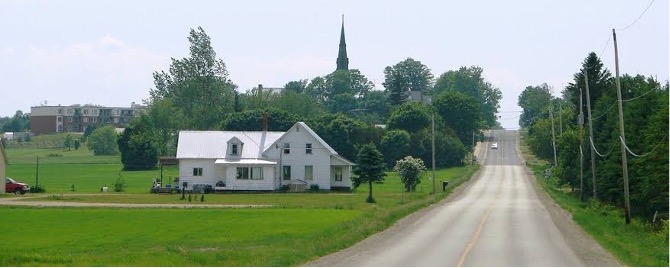
The Story of Lafontaine
Long before there was a village called Lafontaine, people had been living, farming and travelling through this part of Tiny for centuries.
The Lafontaine area lies within historic Wendake, the homeland of the Huron-Wendat. One of the most important archaeological sites in Tiny is Ossossané, once the principal village of the Attignaouantan, or Bear Nation. In the 1630s it contained an estimated 40 longhouses and about 1,500 people. The village stood on an important trail connecting Wendake with the Petun people to the southwest. Nearby is the Ossossané ossuary, associated with the great Feast of the Dead of 1636. Today the sites are recognized as a National Historic Site of Canada.
From Sainte-Croix to Lafontaine
European contact in the area dates to the early 1600s. In 1615, Récollet missionary Joseph Le Caron celebrated Mass in the Wendat village of Carhagouha, in the presence of Samuel de Champlain. Carhagouha was approximately four kilometres from the site of today’s Sainte-Croix church.
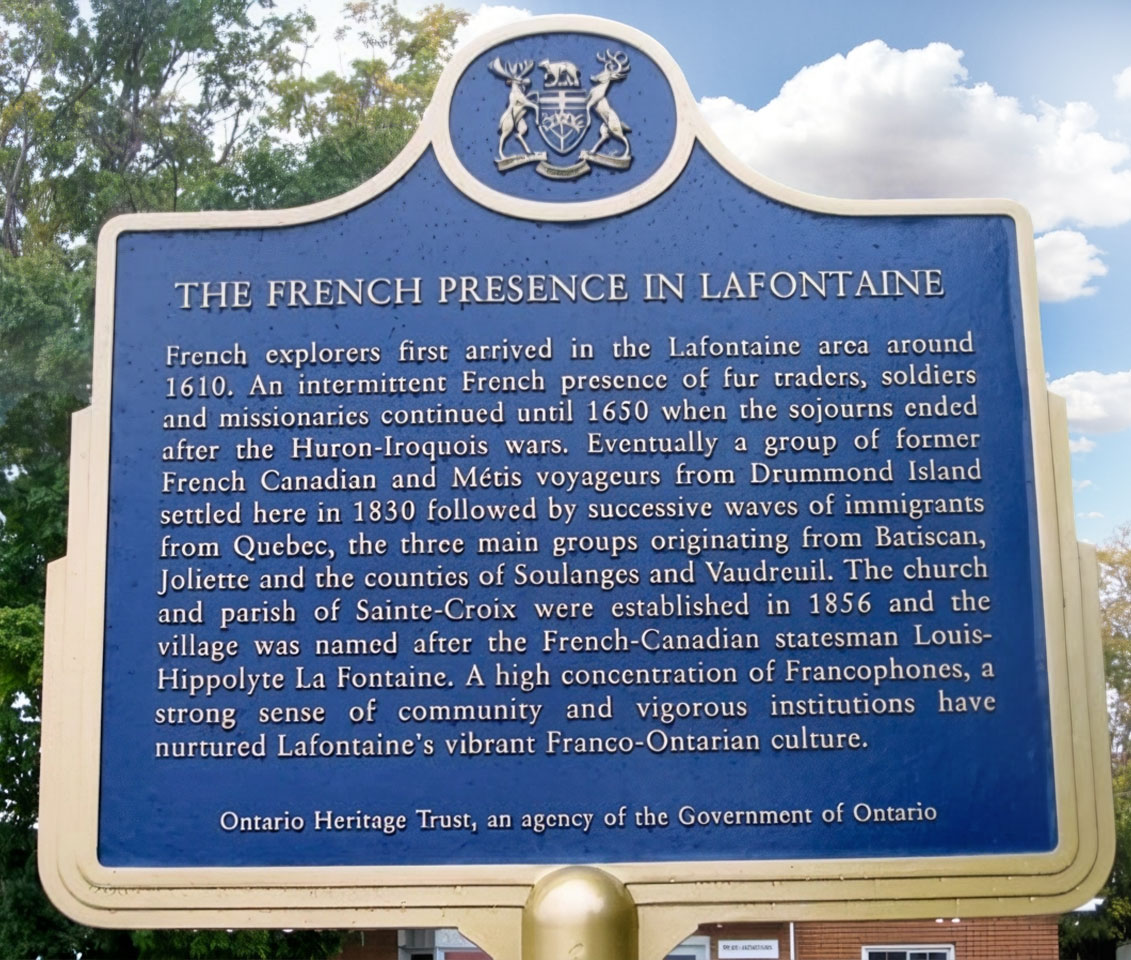
The permanent Francophone settlement that eventually became Lafontaine began much later. Former French-Canadian and Métis voyageurs and their families left Drummond Island after it passed to the United States following the War of 1812 settlement. Some moved into Tiny, with Louis
DesCheneaux establishing a homestead east of present-day Lafontaine around 1830. Beginning in 1841, French-Canadian families also arrived from Batiscan, followed by settlers from Joliette and VaudreuilSoulanges in Quebec.
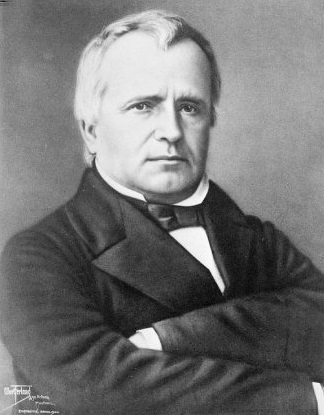
The settlement was originally known as Sainte-Croix — Holy Cross. When a post office was established in 1856, the village took the name Lafontaine, in honour of French-Canadian statesman; Louis-Hippolyte La Fontaine, one of the leading political reformers of pre-Confederation Canada.