

Did you know?
E-Scooter Rules Are Different in Tiny
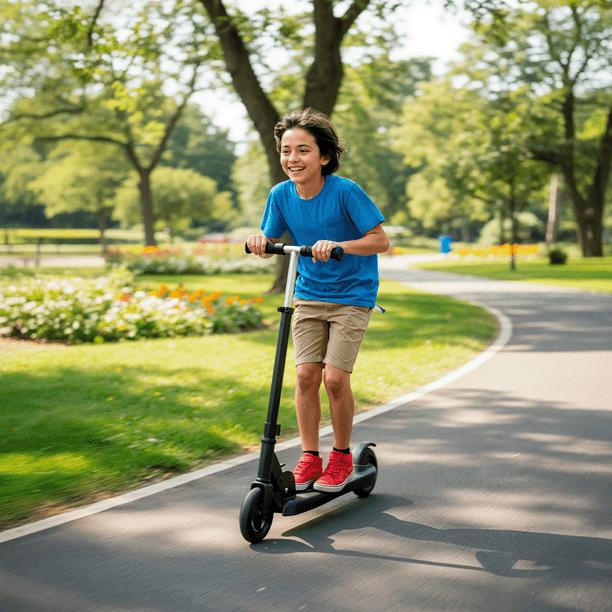
Illustrative image: Bodega Aurrera/YEI product listing
Electric kick-scooters are becoming increasingly common, but Ontario does not automatically permit them on every public road.
Ontario currently operates an e-scooter pilot program. A municipality must choose to participate and pass a bylaw permitting their use. Mississauga participates in the program and allows qualifying e-scooters under specific conditions, including a minimum riding age of 16 and a maximum speed of 24 km/h.
Read Mississauga’s e-scooter safety notice.
The Township of Tiny does not appear to have adopted a bylaw permitting electric kick-scooters under this program. Therefore, residents should not assume that rules in other municipalities allow e-scooters to be operated on public roads in Tiny.
Enforcement responsibilities depend on where the scooter is being used:
- The Ontario Provincial Police have jurisdiction over motorized vehicles operating on public roads.
- The Township of Tiny Municipal Law Enforcement Department enforces Parks By-law 12-032, which prohibits motorized machines on municipally owned lands, including parks, beaches and rights-of-way. Bylaw 14-076 separately prohibits motorized machines on the Tiny Trail.
Electric kick-scooters should not be confused with e-bikes, mobility scooters or ordinary non-electric scooters. Each is classified differently and is subject to different rules.
Before purchasing or operating an e-scooter in Tiny, residents should confirm the current rules with the Township or the OPP.
To report an immediate road-safety concern, call 911 in an emergency or the OPP non-emergency number at 1-888-310-1122. Questions about use on Township property can be directed to Tiny Municipal Law Enforcement at 705-526-4204.
Sources: Ontario e-scooter rules; Township of Tiny motorized-vehicle enforcement; Parks By-law 12-032; and Tiny Trail amendment, Bylaw 14-076
Kitchikewana: The Giant of Georgian Bay
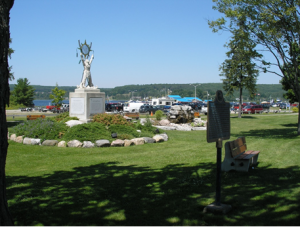
LOCATION: A statue of the legendary Huron-Wendat giant Kitchikewana on the corner of Main Street and Brock Street, Penetanguishene.

The Legend: (Author’s Interpretation)
Long ago, the giant god Kitchikewana fell deeply in love with Wanakita, the beautiful daughter of Musquakie, a northern chief. Believing she would become his wife, Kitchikewana asked Wanakita to marry him. However, she gently refused his proposal because she had already given her heart to another warrior from her tribe. Kitchikewana was devastated. His heartbreak quickly turned to anger, and his terrible rage boiled over. He slammed his enormous hand against the ground with a deafening crash that shook the earth. Birds scattered into the sky, while bears, wolves and other animals fled into the forest to hide. Still overcome with anger, Kitchikewana dug his massive fingers into the land, leaving behind the great bays of the Georgian Bay area. He then gathered an enormous clump of earth, rocks and trees and hurled it far out into the water. The earth broke apart as it fell, creating the thousands of rocky islands now known as Georgian Bay’s famous 30,000 Islands. Exhausted and heartbroken, Kitchikewana walked into the bay and lay down. According to the legend, he fell into an endless sleep, and his enormous body became the land now known as Giant’s Tomb Island.
Wanakita later married the warrior she loved. Years afterward, she travelled to the place now called Penetanguishene to ask Kitchikewana for forgiveness. The sleeping giant did not answer her. Instead, a great forest of pine trees grew across Giant’s Tomb Island, covering his resting place like a green blanket. Some people believe Kitchikewana remains there today, quietly sleeping beneath the trees.
Lafontaine’s Wolf Legend: History, Folklore, and Community Memory
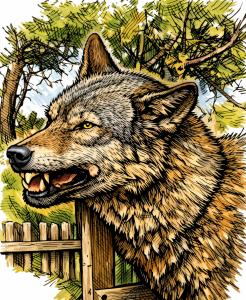
A historical article on the Legend of Loup Lafontaine recounts how a wolf story, rooted in local memory and retold by Father Thomas Marchildon in 1955, became part of Lafontaine’s cultural identity. https://www.ameriquefrancaise.org/en/articles/legend-loup-lafontaine Blending history with folklore, the story reflects early community divisions, shared hardship, and eventual unity among the area’s French-speaking families and Métis settlers. Over time, the legend became an enduring part of local heritage and helped inspire what is now celebrated through the Festival du Loup.
Ticks in Lafontaine
DID YOU KNOW? — Several Types of Ticks Can Be Found Around Lafontaine & Georgian Bay
Health experts are warning that Ontario could see a major increase in ticks this summer due to warmer winters and changing weather patterns. Blacklegged ticks (also called deer ticks) are spreading into more areas of the province and can carry Lyme disease.
Even though the Lafontaine and Georgian Bay area experienced a fairly active and snowy winter this year, health experts are still warning that this area could see a heavy tick season this summer.
Why?
Ticks are surprisingly resilient. Snow cover can actually help insulate ticks from extreme cold, while warmer spring temperatures and wetter conditions can increase their activity early in the season.
Ticks That May Be Found In the Lafontaine / Tiny Township Area
Blacklegged Tick (Deer Tick)
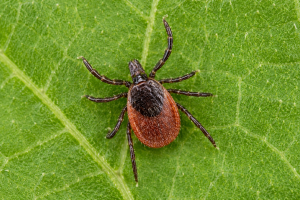
The most talked-about tick in Ontario because it can carry Lyme disease. These ticks are small and dark brown to reddish-orange.
Lone Star Tick
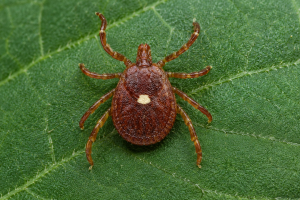
Still uncommon in Ontario but occasionally reported as ticks slowly expand northward. Recognizable by the white dot on the female’s back. While the lone star tick cannot transmit Lyme disease, a bite can cause alpha-gal syndrome (AGS), a serious potentially life-threatening allergy to red meat.
Brown Dog Tick
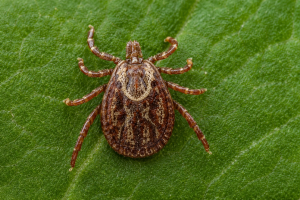
The Brown Dog Tick is considered the most widespread tick species in Ontario! But luckily, it doesn’t typically bite humans. However, when they do, they have been known to transmit the bacterium that causes Rocky Mountain spotted fever, a severe tick-borne illness with a mortality rate of over 20% if not treated early. Symptoms include high fever, chills, muscle aches, headaches, and sometimes a rash. For transmission to occur, however, the tick must be attached for at least six hours.
Ticks are commonly found in:
- Tall grass
- Bush and wooded trails
- Leaf litter
- Cottage and rural properties
- Areas near beaches, dunes, and shoreline vegetation
A few easy ways to help protect yourself and your pets:
- Wear light-coloured clothing when outdoors
- Use insect repellent approved for ticks
- Stay on cleared paths whenever possible
- Check your body and clothing after yard work, hiking, or beach walks
- Pay close attention around ankles, waistlines, behind knees, and under arms
- Shower after outdoor activities
- Keep grass cut short around cottages and homes
- Remove brush piles and excess leaf litter near play or sitting areas
For pet owners:
Dogs can easily pick up ticks around wooded lots, shoreline paths, and trails. Check pets carefully after walks, especially around ears, neck, paws, and under collars. Ask your veterinarian about tick prevention products.
Ticks can be extremely small — some no bigger than a poppy seed — so regular checks are important throughout spring, summer, and fall. If you find an attached tick, remove it carefully with fine-tip tweezers and monitor for symptoms such as rash, fever, fatigue, or joint pain.
With more residents and visitors enjoying the outdoors around Lafontaine and Georgian Bay during the warmer months, awareness and routine tick checks can go a long way toward reducing risk this season.
https://birdwatchinghq.com/ticks-in-ontario/
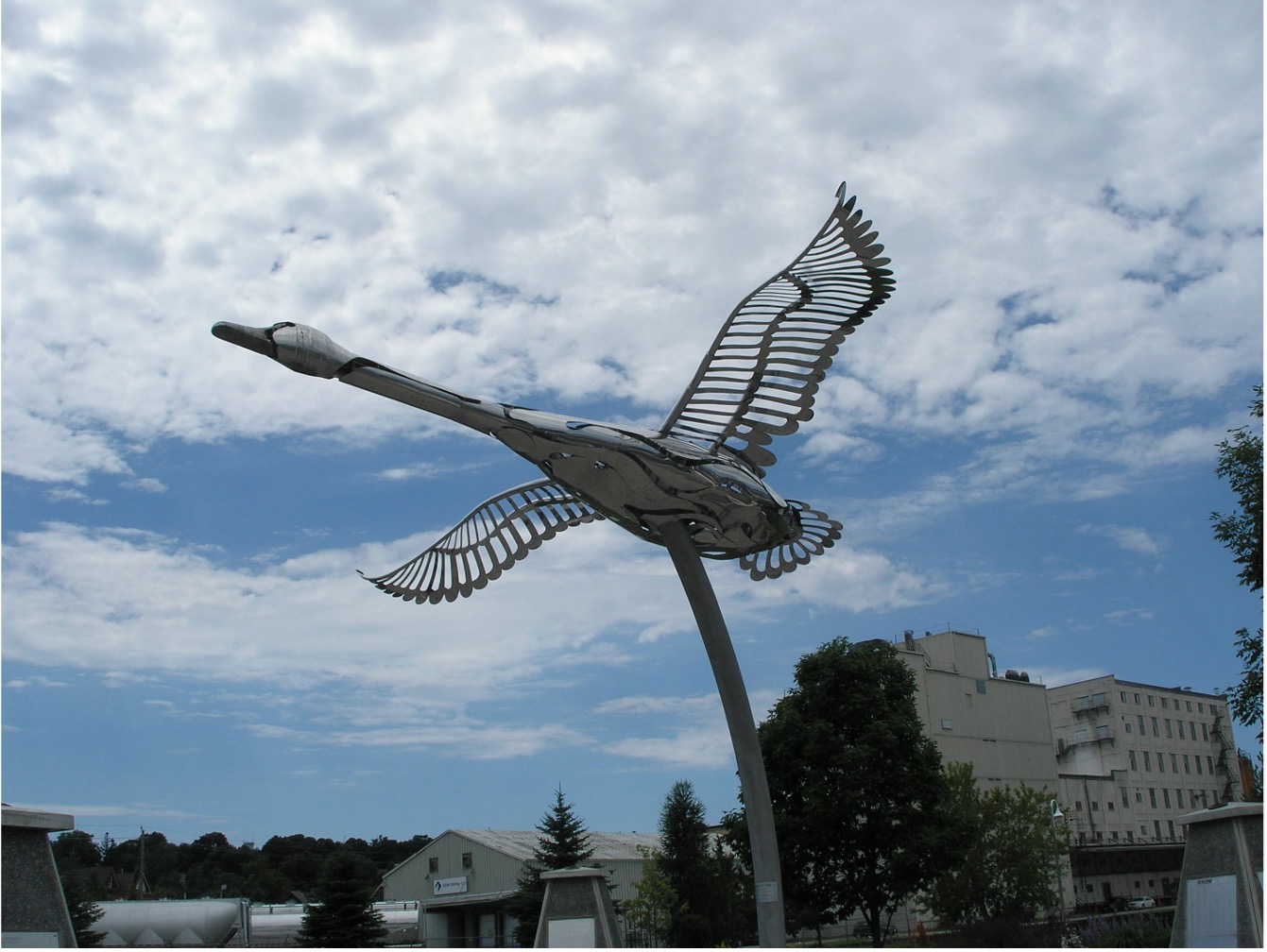
Trumpeter Swan
Did You Know?
The Trumpeter Swan’s return to Ontario is one of the province’s great wildlife success stories.
For about 150 years, trumpeter swans were gone from Ontario after being heavily hunted during earlier settlement and fur trade times. Their comeback is closely linked to the work of Harry Lumsden, a dedicated Ontario biologist who helped lead the reintroduction effort beginning in 1982. Starting with eggs brought from Alberta, he worked with pond owners and volunteers to raise and release birds, helping rebuild a population that had nearly vanished. By 2010, Ontario was home to about 1,000 trumpeter swans.
Their return is also celebrated in our region. The Trumpeter Swan Sculpture, unveiled on October 12, 2001, was created through a community partnership involving the Friends of Wye Marsh, the Town of Midland, and Kindred Industries. Since 1988, trumpeter swans have once again been part of the Wye Valley, and today places such as LaSalle Park in Burlington draw visitors who come to see one of Ontario’s largest winter gatherings of these remarkable birds.
What was once lost has become a symbol of restoration, community effort, and the lasting impact of conservation.
https://www.trumpeterswansociety.org/file_download/inline/00d4bc25-aea7-4248-8023-a0beeff14b09
Dog licences and parking
Parking Permits and dog licences
Resident Parking Permits are now available, the first permit is free to property owners, a second is available for $30. The Township also issues a total of 225 Non-Resident parking permits on a first come first served basis for an annual fee of $225.
Dog Licences are required for all Dogs in the Township, unless already licenced in another municipality. If you apply by March 31st, the fee is $20, the fee increases to $30 after that.
Your Fire Permit expired January 1st, they cost $30 annually and can be purchased at T’s Market or the Township offices or on-line via Tiny’s website (link below).
Visit www.tiny.ca/permits for more information about the permits and related by-laws or to obtain your permit through the convenient on-line application and payment system.